Decorative Monochrome Mandala: Elevating Your Design with Precision and Elegance
When you first encounter a Decorative Monochrome Mandala, it is easy to be drawn in by the sheer complexity of its lines and the hypnotic rhythm of its patterns. These intricate circular designs have transcended their spiritual origins to become a staple in modern graphic design, branding, and interior aesthetics. However, there is often a disconnect between the visual appeal of a mandala and the technical reality of using one effectively in a professional project. Many creators assume that because a design looks beautiful on a screen, it will perform equally well when printed or scaled for large formats.
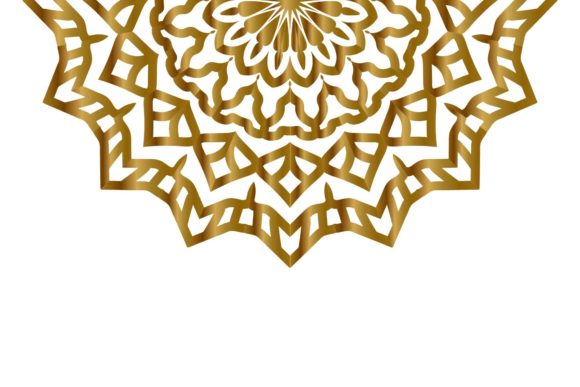
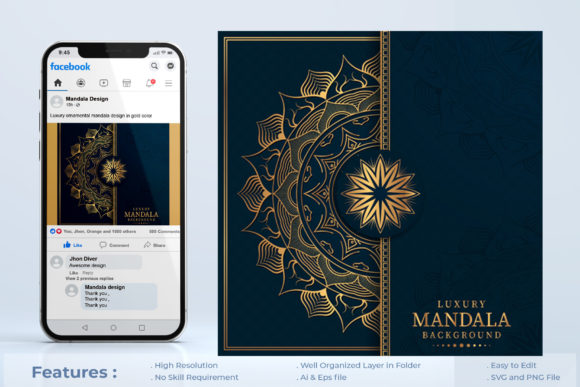
The truth is that the quality of your final output depends entirely on the source file you choose. A common pitfall for both beginners and seasoned professionals is settling for low-resolution raster images that pixelate when resized. To truly leverage the power of this art form, you need a foundation built on vector technology. This is where the combination of a Luxury mandala background with golden arabesque Arabic east style becomes a game-changer, provided you have access to the right editable assets.
The Critical Difference Between Raster and Vector Files
One of the most frequent mistakes made when acquiring digital art is ignoring the file format. If you download a mandala pattern as a standard JPEG or PNG without checking the underlying structure, you are limiting your creative potential significantly. Raster images are made of pixels; when you try to enlarge them beyond their original dimensions, they become blurry and jagged. This can ruin a presentation for a small business owner trying to print a banner or an educator creating a high-quality handout.
In contrast, a Adobe Illustrator file (AI) or an EPS file contains mathematical paths rather than fixed pixels. This means you can scale a Decorative Monochrome Mandala from a tiny icon on a website to a massive wall mural without losing a single line of detail. The ability to resize to big dimensions is not just a convenience; it is a necessity for professional work. Without these vector formats, you risk wasting money on reprints or being forced to compromise on the visual impact of your project.
Navigating the Complexity of Luxury Arabesque Styles
Integrating a Luxury mandala background with golden arabesque Arabic east style adds a layer of sophistication that can elevate any brand identity. However, the "gold" in these designs is often where users face challenges. In many low-quality downloads, the gold color is simply a flat yellow fill or a pre-baked gradient that cannot be adjusted. When you attempt to change the color scheme to match your brand palette, you find yourself stuck with a design that refuses to cooperate.
A superior approach involves selecting files where the colors are separated into distinct layers. In a properly structured AI or EPS file, the golden elements should be on their own layer, allowing you to instantly swap the hue, adjust the opacity, or apply metallic effects without redrawing the entire pattern. This level of editability saves hours of manual labor and ensures consistency across all your marketing materials. If you are a marketer or freelancer, time is money, and the ability to tweak a luxury element in seconds rather than minutes is invaluable.
Why Layer Management Matters
Before you commit to downloading a specific asset, take a moment to verify the layer organization. Poorly organized files can be a nightmare to navigate, especially when working with complex arabesque patterns that feature overlapping lines and intricate details. A well-prepared file will separate the monochrome base from the golden accents, making it easy to isolate specific sections for editing. This separation also allows you to remove the golden elements if you decide to go for a strictly black-and-white aesthetic later on.
Without this flexibility, you might end up with a design that looks generic or mismatched. For instance, if you are designing a wedding invitation suite, the ability to easily adjust the gold to a rose-gold tone or a deep bronze can make the difference between a standard template and a bespoke luxury product. Always check the image preview in JPG format to see the overall composition, but rely on the AI/EPS file to confirm that the internal structure supports your workflow.
Common Pitfalls in Sourcing and Evaluating Mandala Assets
Many consumers fall into the trap of assuming that all mandala designs are created equal. While the visual style might appear similar, the technical execution varies wildly. A critical error to avoid is purchasing a bundle based solely on the thumbnail image. Thumbnails can be misleading, often hiding issues like missing fonts, grouped objects that are difficult to ungroup, or hidden layers that clutter the workspace.
To ensure satisfaction, you must evaluate the usability of the file before buying. Ask yourself: Can I easily select individual petals? Is the symmetry adjustable, or is it locked in place? If you cannot manipulate the geometry of the Decorative Monochrome Mandala without breaking the design, you are looking at a static image disguised as a vector. This limitation severely restricts your ability to customize the piece for unique applications, such as embroidery patterns or laser cutting projects.
- Check the Editability: Ensure the file is fully editable and not flattened. You should be able to move, rotate, and recolor every element.
- Verify the Resolution: Even though vectors are scalable, always check the preview image to ensure the initial concept matches your vision.
- Assess the File Size: Extremely large file sizes might indicate unnecessary complexity, while extremely small ones might suggest missing data or poor optimization.
Maximizing Value Through Versatility
The true value of a high-quality Luxury mandala background with golden arabesque Arabic east style lies in its versatility. A single well-crafted vector file can serve multiple purposes throughout your career. It can act as a watermark for your photography portfolio, a texture for a book cover, or the central motif for a corporate logo. By choosing a format that includes both AI and EPS files, you future-proof your investment. The AI format is ideal for those who work within the Adobe ecosystem, offering advanced features and seamless integration, while the EPS format ensures compatibility with other design software like CorelDRAW or Affinity Designer.
This dual-format approach eliminates the frustration of converting files, which can sometimes introduce errors or alter the crispness of the lines. For educators and bloggers, this means you can create engaging content quickly without getting bogged down in technical troubleshooting. You can focus on the story you want to tell, knowing that your visual assets are robust and ready to adapt to any medium.
Making the Right Choice for Your Project
When evaluating your options, look for resources that emphasize ease of use and high resolution. A good asset pack will provide clear documentation or examples of how to use the files. Don't settle for a design that requires extensive cleanup before it is usable. Instead, seek out collections that prioritize clean code and logical layering. This upfront investment in quality pays dividends in efficiency and the professional polish of your final work.
By understanding the technical requirements of vector graphics and recognizing the specific benefits of a layered, editable Decorative Monochrome Mandala, you position yourself to create work that stands out. Whether you are a hobbyist exploring new artistic techniques or a business owner building a premium brand, the right tools make all the difference. Avoid the common pitfalls of low-quality downloads and embrace the freedom that comes with having full control over your design elements. With the right AI and EPS files in your toolkit, you can transform a simple pattern into a powerful visual statement that resonates with your audience.