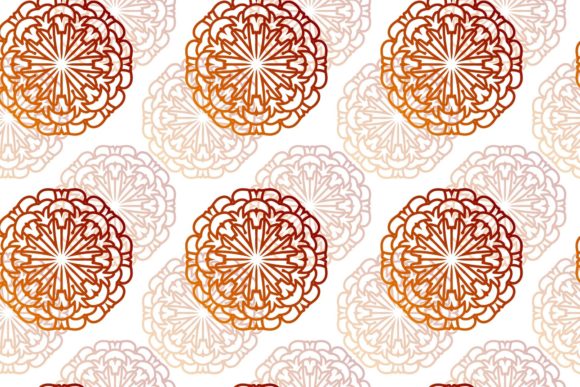
Mandala Circle Decorative Patterns: A Comprehensive Guide to Digital Assets for Designers
In the evolving landscape of digital design, finding high-quality vector assets that balance intricate detail with technical versatility is a persistent challenge. Mandala Circle Decorative Patterns represent a specific category of geometric art that has gained significant traction among professionals and hobbyists alike. These designs are not merely aesthetic choices; they are complex mathematical arrangements that offer symmetry, rhythm, and a sense of order often sought in modern interior and graphic design projects. Understanding the nuances of these patterns, particularly when evaluating them as downloadable digital files, requires a closer look at their structural integrity, file formats, and practical applications.
The Distinctive Nature of Mandala Circle Decorative Patterns
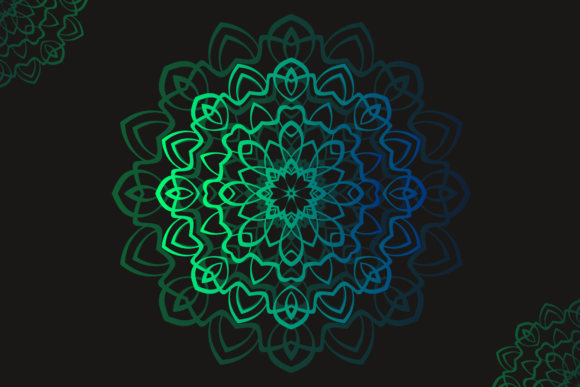
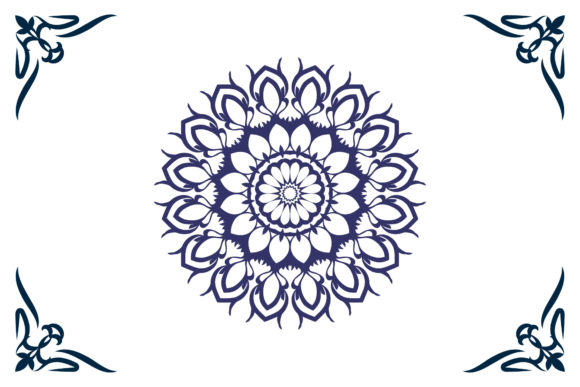
At its core, a mandala is a spiritual and ritual symbol in Hinduism and Buddhism, representing the universe. In contemporary design, this concept has been adapted into Mandala Circle Decorative Patterns that serve purely aesthetic and functional purposes. What makes these patterns distinct from other geometric or floral motifs is their radial symmetry. Unlike linear patterns that repeat horizontally or vertically, mandalas radiate from a central point, creating a focal point that naturally draws the eye.
When evaluating a set of Mandala Circle Decorative Patterns, the quality of the underlying geometry is paramount. High-quality sets maintain perfect alignment even when scaled down to small icons or up to massive wall murals. The complexity of the lines varies, allowing designers to choose between delicate, lace-like structures or bold, heavy-weighted forms. This variability ensures that the pattern can function as a subtle background texture or as a dominant centerpiece in a composition.
Unlike raster-based clipart, which relies on pixel grids, true mandala patterns rely on vector mathematics. This distinction is critical because it dictates how the image behaves during the editing process. When you select a high-quality set, you are typically looking for designs where every curve and intersection is defined by Bézier curves rather than pixels. This mathematical foundation allows for infinite scalability without the degradation of image quality, a trait that separates professional-grade resources from amateur stock imagery.
Evaluating File Formats and Technical Specifications
One of the most critical factors in selecting a digital asset package is the variety of file formats provided. A robust collection of Mandala Circle Decorative Patterns should not be limited to a single format. The standard expectation for professional use involves receiving a comprehensive suite of files that cater to different stages of the workflow. Typically, a premium offering includes five distinct file types: AI, EPS, SVG, JPG, and PNG.
- AI (Adobe Illustrator) Files: These are the native editable source files. They are essential for designers who need to modify the color palette, adjust stroke widths, or rearrange elements within the mandala. Without an AI file, the user is locked into the original creator's vision.
- EPS (Encapsulated PostScript) Files: Similar to AI but compatible with a wider range of legacy software and print workflows. This format is vital for users working with older versions of Adobe software or specialized printing RIPs (Raster Image Processors).
- SVG (Scalable Vector Graphics) Files: The gold standard for web design. SVG files allow the mandala to scale perfectly on any screen resolution, from mobile devices to 4K monitors, without becoming pixelated. They also support transparency and can be styled directly via CSS code.
- JPG (JPEG) Files: While lossy compression means they are not ideal for further editing, JPGs are universally compatible. They are perfect for quick previews, social media sharing, or embedding in email newsletters where vector support might be blocked.
- PNG (Portable Network Graphics) Files: These provide high-resolution raster images with transparent backgrounds. For a canvas size of 1920px x 1280px, PNGs offer a "ready-to-use" solution that preserves the sharpness of the lines while allowing the design to sit cleanly over any background color or photograph.
The inclusion of a 1920px x 1280px canvas size in raster formats is particularly noteworthy. This resolution exceeds the standard HD definition (1920x1080), providing extra vertical space that is beneficial for portrait-oriented layouts or specific aspect ratios used in mobile advertising. It ensures that the intricate details of the Mandala Circle Decorative Patterns remain visible even when cropped or zoomed.
Comparing Approaches: Custom Creation vs. Curated Collections
Designers often face a binary choice: create a mandala from scratch using vector tools like Adobe Illustrator or Inkscape, or purchase a curated collection of pre-made Mandala Circle Decorative Patterns. Each approach has distinct tradeoffs regarding time investment, cost, and creative control.
Custom Creation: Building a mandala manually offers absolute freedom. You can dictate every line weight, every rotation angle, and every color gradient. However, this method is time-intensive. Creating a symmetrical, mathematically precise mandala requires advanced skills in vector manipulation. For a professional deadline, spending hours constructing a base structure may not be feasible. Furthermore, achieving the same level of polish as a professionally designed asset can be difficult without years of practice.
Curated Collections: Purchasing a set of Mandala Circle Decorative Patterns provides immediate access to polished work. The primary advantage here is efficiency. Instead of starting from a blank canvas, the designer begins with a fully realized asset. The tradeoff is a limitation in structural changes; while colors and sizes can be adjusted, the fundamental geometry is fixed. However, if the goal is to integrate a high-quality decorative element quickly, a curated collection is often the superior option.
When comparing these options, one must also consider the versatility of the final product. A good collection offers multiple variations within the same theme. If a buyer purchases a single mandala, they might find themselves needing to buy another to get a complementary style. A comprehensive package, such as one containing five distinct files, mitigates this issue by offering variety within a cohesive visual language.
Best-Fit Scenarios and Decision Factors
Deciding whether to utilize Mandala Circle Decorative Patterns depends heavily on the intended application. These assets shine in specific contexts where symmetry and elegance are required.
Interior Design and Wall Art: The 1920px x 1280px resolution is ideal for digital mockups of wall art or large-scale prints. The vector nature of the AI and EPS files ensures that a customer can print the mandala on a poster board or a large canvas without worrying about blurriness. The radial symmetry works exceptionally well in circular frames or as a focal point above a sofa.
Web and App UI/UX: For web developers, the SVG format is indispensable. Using Mandala Circle Decorative Patterns as loading spinners, section dividers, or background textures adds a layer of sophistication to a website. Because SVGs are lightweight and scalable, they do not impact page load speeds negatively, unlike heavy raster images.
Print Media and Packaging: The ability to edit the design in AI or EPS makes these patterns perfect for packaging design. A cosmetic brand might use a mandala to frame product text, or a stationery company might use it as a watermark. The precision of the vector lines ensures crisp edges on printed materials, which is crucial for branding consistency.
However, there are limitations. If a project requires a highly organic, hand-drawn feel with irregular imperfections, a mathematically generated mandala might feel too rigid. In such cases, a watercolor illustration or a sketch-style asset would be a better fit. Additionally, if the design needs to be animated, the SVG format is excellent, but the AI/EPS files require conversion before they can be manipulated in animation software.
Navigating the Selection Process
When evaluating potential resources for Mandala Circle Decorative Patterns, the focus should remain on the utility of the deliverables. A common pitfall is purchasing a low-resolution pack that looks good on a screen but fails when printed or edited. Always verify the presence of the full vector suite (AI, EPS, SVG) alongside the high-resolution raster backups (JPG, PNG).
The value proposition lies in the combination of editability and readiness. A file that is only a JPG is useful for viewing but useless for customization. Conversely, a file that is only an AI file might be difficult for non-designers to open. The ideal package bridges this gap, offering the flexibility of vector editing for professionals and the ease of use of high-res rasters for general consumers.
Ultimately, the decision to incorporate Mandala Circle Decorative Patterns into a project should be driven by the specific needs of the design brief. If the goal is to add a touch of geometric harmony, cultural depth, or visual balance to a layout, these patterns offer a reliable and versatile solution. By understanding the strengths of the various file formats and recognizing the differences between custom creation and curated assets, designers can make informed choices that enhance their workflow and elevate the quality of their final output.